If you keep finding thick chunks of comb and propolis jammed into the gaps between your frames, the cause almost always comes down to one thing: bee space. Bees are precise about how much room they'll leave open, and getting that spacing wrong is what triggers the mess.
This guide covers what bee space actually is, why gaps outside that range cause problems, and how to clean it up during a normal inspection.
What Is Bee Space?
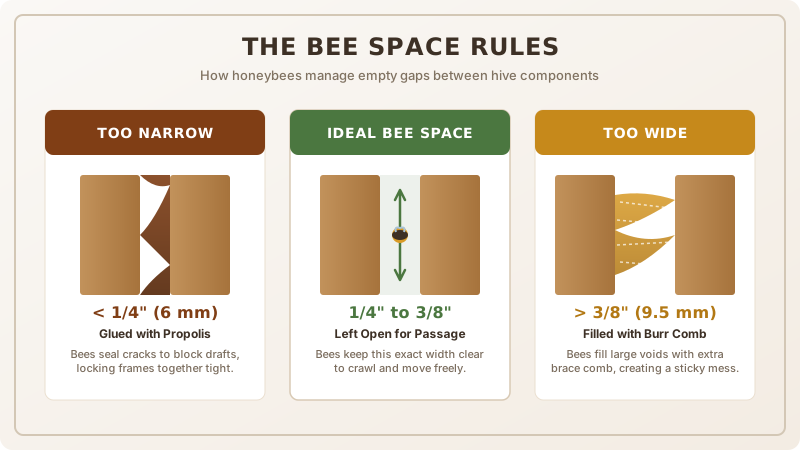
Bee space is the specific gap bees will leave open for movement, rather than filling it in. It's generally accepted to fall between 1/4 inch and 3/8 inch (roughly 6 to 9.5 mm).
The concept was discovered by Lorenzo Langstroth in the 1850s, and it's the reason modern hives use removable frames at all. Before this discovery, bees would seal or fill in gaps in fixed hive designs, making inspections destructive. You can read more about the history and specifics on Carolina Honeybees' overview of bee space.
What Happens When Bee Space Is Violated
Bees respond very differently depending on which direction a gap misses that range.
A gap smaller than 1/4 inch gets treated as a crack. Bees will seal it up with propolis, which can glue frames and boxes together tightly enough to make removal difficult.
A gap larger than 3/8 inch gets treated as open space worth using. Bees will build burr comb, sometimes called brace comb, to bridge it. This is the extra, often messy comb you find connecting frames or filling in awkward gaps that shouldn't be there.
How to Spot and Fix It During an Inspection
Pull a frame and look closely at where it meets its neighbor. If you see a noticeable buildup of comb or propolis in that gap, bee space has likely been violated somewhere in the box.
Use your hive tool to scrape both sides back down to the wood. This can get surprisingly thick if it's been building for a while, so don't be surprised if it takes a bit of work.
Once it's cleared, push the frames back together snugly, with even spacing on both sides of the box. This restores proper bee space across the whole set of frames rather than just fixing the one gap you noticed.
One more habit worth building in: when you put frames back, consider rotating one of the pair so any irregular bulges in the comb no longer face each other the same way they did before. Two uneven surfaces facing the same direction they were in before tend to recreate the same oversized gap, undoing the cleanup you just did. Turning one frame around gives the bees a fresh, flatter surface to work with instead.
Why This Matters Beyond Tidiness
Excess burr comb makes frames noticeably harder to remove without tearing something or breaking a piece of equipment. For the actual technique to get a stuck frame out safely once you're in that situation, see the guide on using a hive tool to remove stuck frames. Burr comb can also make it harder to spot the queen or check brood clearly during an inspection, since extra comb gets in the way of a clean view.
Left unaddressed over a season, bee space violations tend to compound. What starts as a small gap in one spot often turns into a box full of frames that no longer sit evenly, making every future inspection slower and messier than it needs to be.
Bee Space Quick Reference
Swipe sideways on the table below if you're on a phone and it doesn't fit your screen.
| Gap Size | What Bees Do |
|---|---|
| Less than 1/4 inch | Seal it with propolis |
| 1/4 inch to 3/8 inch | Leave it open, ideal bee space |
| More than 3/8 inch | Fill it with burr or brace comb |
Frequently Asked Questions
What is bee space in beekeeping?
Bee space is the gap, roughly 1/4 to 3/8 inch, that bees will naturally leave open for movement rather than sealing or filling in. It was discovered by Lorenzo Langstroth in the 1850s and is the foundation of modern removable-frame hive design.
Why do bees build extra comb between my frames?
This happens when a gap between frames or boxes is larger than 3/8 inch. Bees treat that extra space as room to build, filling it with burr comb rather than leaving it empty.
How do I get rid of burr comb during an inspection?
Use a hive tool to scrape the buildup back down to the wood on both sides of the gap, then push the frames back together with even, snug spacing to restore proper bee space.
Will burr comb just come back after I clean it up?
It can, especially if the same irregular surfaces end up facing each other again. Rotating one of the two frames when you put them back gives the bees a flatter surface to work with and reduces the odds of the same gap reappearing.
Does bee space apply to plastic foundation too?
Yes. Bee space is about the physical gap between frames and boxes, not the foundation material itself, so the same 1/4 to 3/8 inch guideline applies regardless of whether you're using wax or plastic foundation.
Who discovered bee space?
Lorenzo Langstroth identified the concept in the 1850s. His discovery led directly to the removable-frame hive design that's still standard in modern beekeeping today.