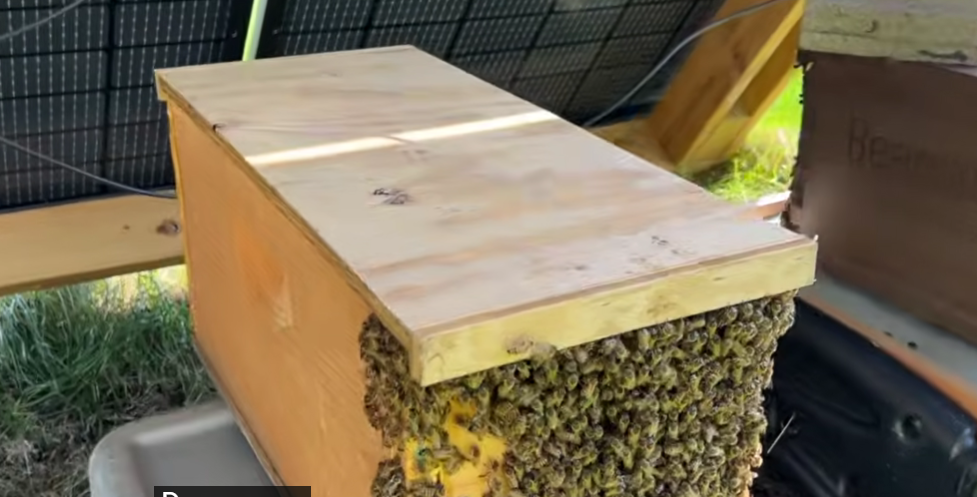
Extreme heat is genuinely dangerous for a colony, not just uncomfortable. Brood can overheat, foraging stops as bees switch to hauling water instead, and honey production drops. It's just as dangerous for you as the beekeeper, and heat exhaustion in the bee yard is a real risk that's easy to underestimate.
This guide covers what's actually happening inside the hive during a heat wave, how to help your bees cope, and how to keep yourself safe while you do it.
How Extreme Heat Affects a Colony
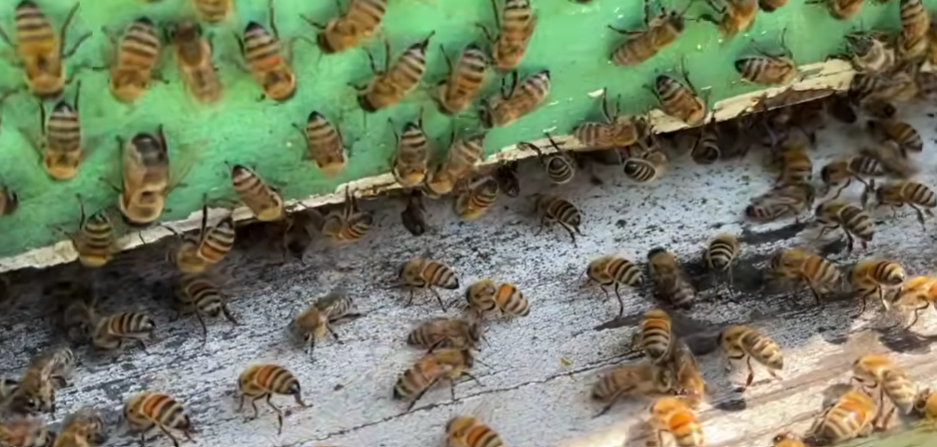
Bees work hard to keep the brood nest at a stable temperature, generally in the range of 33 to 36°C (91 to 97°F), regardless of what's happening outside. Under normal conditions, they're remarkably good at it.
Extreme, sustained heat can overwhelm that system. Research published in Ecological and Evolutionary Physiology found that severe heat waves can measurably reduce colony populations by disrupting brood thermoregulation and shortening adult worker lifespans, with smaller colonies affected the most. You can read more about the study on ScienceDaily's coverage of the research.
When it gets hot enough, bees shift almost entirely away from collecting nectar and pollen and switch to hauling water instead. They bring it back, spread droplets near the brood, and fan their wings to drive evaporative cooling. It's effective, but it comes at a real cost: less foraging means less honey, and if the heat is severe enough for long enough, some brood loss is possible even with the colony doing everything right.
Protect Yourself First
This matters more than people expect. Heat exhaustion is a real danger in a bee suit on a brutally hot day, and it can escalate quickly. Dizziness, nausea, and a sudden drop in your ability to think clearly or move safely are all warning signs.
Plain water isn't always enough. When you're sweating heavily, you're also losing electrolytes, and an electrolyte drink does more to keep you functional than water alone.
One practical trick: you don't have to break your smoke or take your veil off to drink. Most veils let you tip a bottle up and drink right through the mesh without fully suiting down.
I keep a bottle within reach for exactly this reason on the worst days. Stopping to fully degear just for a sip is enough of a hassle that people skip it, and that's how dehydration sneaks up on you.
Provide Shade
Full sun on a hive is normally a good thing, since it helps discourage small hive beetles. During extreme heat, the tradeoff shifts, and temporary shade is worth it.
A simple board, whether it's plywood, thin OSB, or a piece of rigid foam board, propped over the hive and weighted down with a brick or block, makes a real difference. If it's adjustable, you can shift it through the day to track the sun. For smaller setups, a hive shade cover works well and is easier to reposition than a heavy board.
Add a Little Extra Ventilation
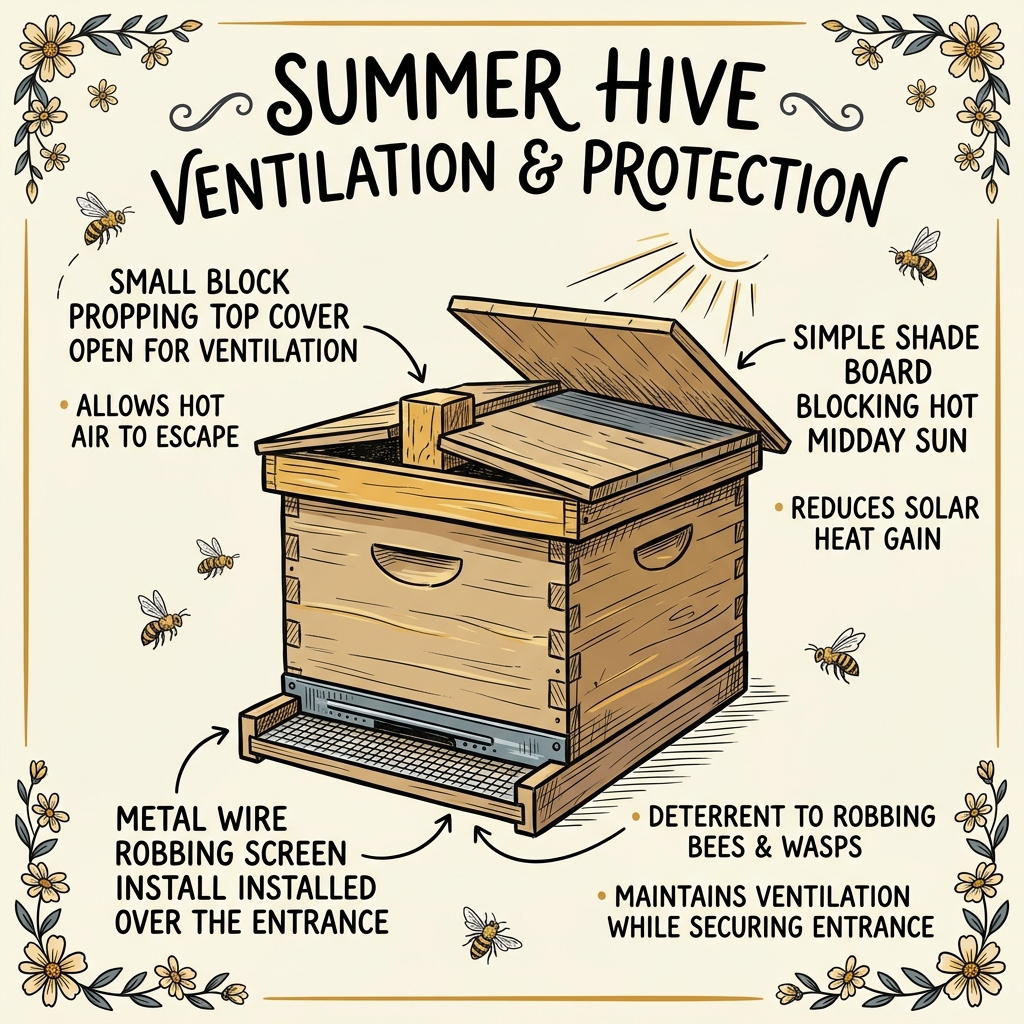
Propping the outer cover up slightly, even with something as small as a stick or a coin, gives hot air an extra way to escape and helps the colony's own fanning efforts go further. It's a small adjustment, but it costs nothing and adds up during a stretch of consecutive hot days.
Set Up More Water Stations Than You Think You Need
One water source usually isn't enough, and bees are surprisingly picky about which ones they'll actually use. Set up several water stations spread around the property rather than relying on a single spot.
Don't assume a nearby pond or creek covers it. Bees tend to favor whatever water source is closest and most convenient, and a natural source a bit farther off often gets ignored in favor of something right at the hive. Add sticks, rocks, or anything else that floats or breaks the surface, since bees aren't strong swimmers and need a place to land without drowning.
Expect More Defensive Bees
Colonies tend to get noticeably more defensive during extreme heat. Normal work is disrupted, resources are tighter, and bees are simply more on edge. Wear full protective gear even if you'd normally cut corners, move calmly, and try to keep hive time short and efficient rather than lingering. For more on reading the signs and adjusting your technique, see the guide on working defensive bees safely.
What Not to Do
A few well-intentioned interventions tend to cause more problems than they solve. Avoid pointing fans directly at hives, placing ice inside them, or spraying bees down with water. None of these mimic what the colony is actually doing to manage its own temperature, and they can disrupt the colony's own cooling efforts rather than help. Shade, a little extra ventilation, and reliable water access cover the vast majority of what a colony actually needs.
Extreme Heat Checklist
Swipe sideways on the table below if you're on a phone and it doesn't fit your screen.
| Action | Why It Helps |
|---|---|
| Drink electrolytes, not just water | Prevents heat exhaustion while you work |
| Add temporary shade | Reduces internal hive temperature |
| Prop the outer cover slightly | Adds airflow, supports the colony's own cooling |
| Set up multiple water stations | Bees favor the closest convenient source |
| Wear full gear, work efficiently | Bees are more defensive when overheated |
Frequently Asked Questions
How do I know if my bees are overheating?
Watch for a sudden drop in foraging activity combined with heavy traffic of bees flying in and out on water runs instead. Bees fanning heavily at the entrance and clustering outside the hive (bearding) are also signs the colony is working hard to manage internal heat.
What should I drink to stay safe working bees in extreme heat?
Water alone often isn't enough once you're sweating heavily. An electrolyte drink helps replace what you're losing and keeps you functional longer than water by itself.
Should I use a fan or spray my bees with water to cool them down?
No. Fans, ice, and spraying bees directly can disrupt the colony's own cooling process rather than help it. Shade, minor ventilation adjustments, and reliable water access are more effective and less disruptive.
How many water stations do my bees actually need?
More than one is usually a good idea. Bees are selective about which water sources they use, and spreading a few stations around the property increases the odds they'll find and rely on ones close to the hive instead of foraging farther for water.
Why are my bees more aggressive during a heat wave?
Extreme heat disrupts normal foraging and colony work, and bees tend to become more defensive as a result. It's worth expecting this and adjusting how you work hives on the hottest days rather than assuming something else is wrong.
Can hive shade hurt my bees by attracting small hive beetles?
Full sun is normally preferred partly because it discourages beetles, but temporary shade during a genuine heat emergency is a reasonable tradeoff. Removing the shade once temperatures drop back down avoids leaving the colony in prolonged shade unnecessarily.