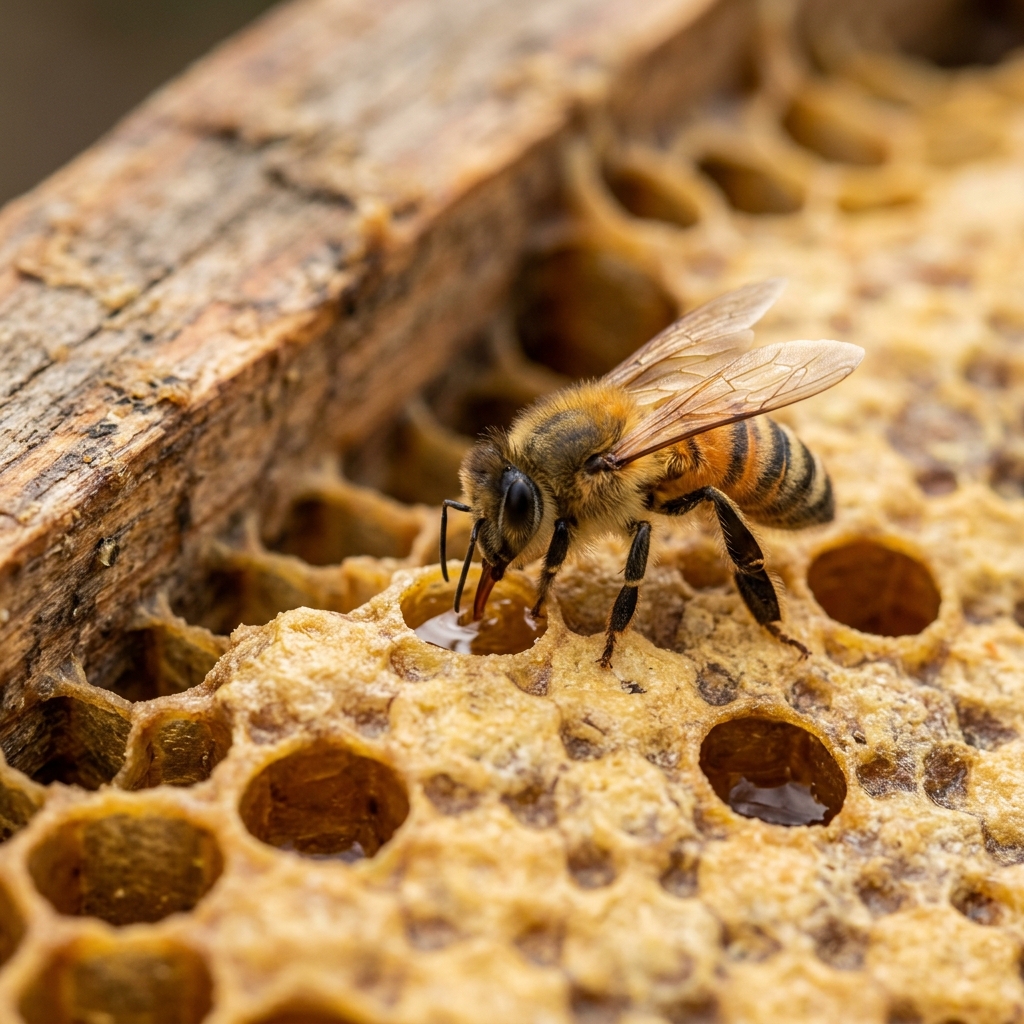
Varroa mites reproduce inside capped brood, which means a colony that's constantly raising new brood is constantly giving mites a place to multiply. Caging the queen for a stretch interrupts that cycle without a single chemical treatment. It's a real technique, but doing it well takes longer than a lot of beekeepers expect.
This guide covers how the technique actually works, how long it really takes to be effective, and what to watch for while the queen is confined. If you're looking for a lighter-touch non-chemical option that doesn't involve confining the queen at all, using green drone comb as a mite trap is worth comparing against this technique.
Why This Works
Mites reproduce almost exclusively inside capped brood cells, since that's where they're sealed away from grooming bees and have time to complete their own life cycle. Stop new eggs from being laid, and eventually every cell that had brood in it hatches out, leaving the colony with no capped brood at all for a window of time. Mites that would have reproduced in that brood have nowhere left to go.
That window, called a broodless period, is when mites are most exposed and most vulnerable, whether you're relying on the brood break alone or pairing it with a treatment during that specific window.
How Long It Actually Takes
This is the part that surprises people. A queen caged for just a few days interrupts laying briefly, but it doesn't create a genuine broodless period on its own. Worker brood already in the cells when you cage the queen still takes about 21 days to fully emerge, and drone brood takes even longer. The colony isn't truly broodless until all of that existing brood has hatched out.
Most research-backed versions of this technique confine the queen for roughly three weeks, not a handful of days, to actually reach that broodless point. Some beekeepers do use shorter cage periods of under a week as a lighter, partial version of the idea. That's not without value, but it's worth knowing it interrupts laying rather than achieving a true mite-starving broodless period the way a full three-week break does.
What You'll Need
A simple push-in introduction cage works fine for a short confinement, but for a multi-week brood break, you'll want a proper queen isolator cage designed to keep her fed and cared for by workers over an extended period, rather than a basic transport-style cage.
What to Watch For During Confinement
Colonies sometimes respond to a caged queen by starting supersedure cells, especially over a longer confinement, since her pheromone signal weakens when access to her is restricted. Check for supersedure cells around day seven or eight and remove any you find if you want to keep this specific queen rather than let the colony replace her.
Bees will also try to free her. Even a well-fitted cage can end up compromised sooner than planned, so treat the target duration as a goal rather than a guarantee, and check on progress periodically rather than assuming she'll still be confined exactly on schedule. I've had queens dug out well ahead of schedule more than once, so I don't count on the full duration going perfectly.
Does This Colony Have the Population for It?
A multi-week brood break slows colony growth, since no new worker bees are being started for that stretch. This makes sense for an established, populous hive, but it can set back a smaller or still-building colony more than you want. Save this technique for hives that already have the numbers to absorb a temporary pause in growth.
Combine It With a Broodless-Window Treatment
A brood break alone reduces mite numbers, with some sources citing reductions of roughly half the mite population over a full break, but it's rarely a complete solution on its own. Applying a treatment like oxalic acid during the broodless window, when mites have nowhere to hide in capped cells, tends to be significantly more effective than either approach used alone. See the comparison of chemical Varroa treatments for help choosing one. For more detail on how brood breaks fit into an overall mite management plan, see Penn State Extension's overview of integrated Varroa mite management.
Frequently Asked Questions
How long should I cage the queen to control mites?
Roughly three weeks is what's needed to reach a genuine broodless period, since existing worker brood takes about 21 days to fully emerge after you stop new laying. Shorter cage periods interrupt laying but don't achieve the same effect.
Do I need a strong colony to try this?
Yes. A multi-week brood break slows population growth, so it's better suited to an established, populous hive than a smaller colony still building up, which could be set back more than intended.
Will the bees try to free the queen while she's caged?
Often, yes. Even a well-fitted cage can get compromised sooner than planned, so check on progress rather than assuming the full duration will go exactly as intended.
Is caging the queen enough to fully control mites on its own?
Usually not completely. It meaningfully reduces mite numbers, but combining the broodless window with an actual treatment tends to be far more effective than a brood break alone.
What kind of cage should I use for a multi-week brood break?
A dedicated queen isolator cage that allows workers to feed and tend her is a better fit than a basic introduction cage, since she needs to be cared for over a much longer period than a typical few-day confinement.