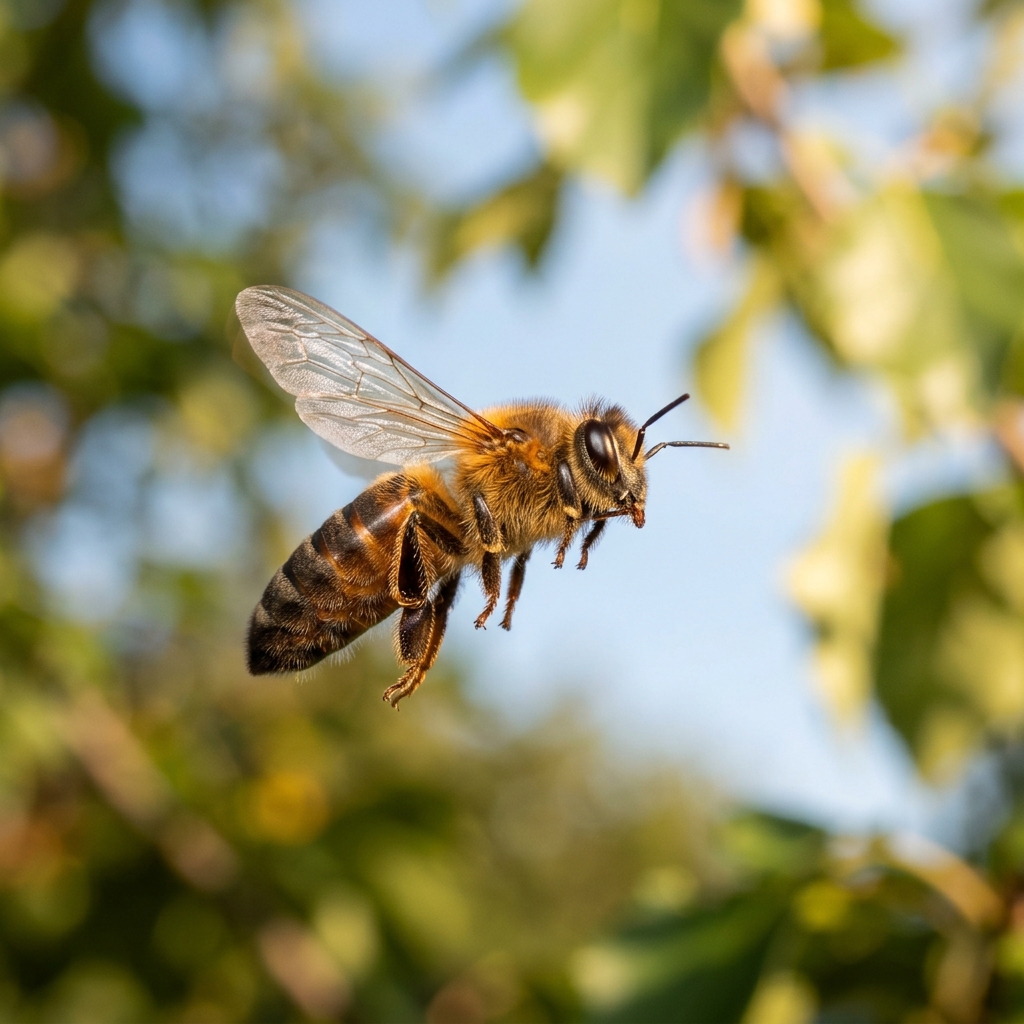
A virgin queen leaves the hive exactly once in her life to mate, and everything about her future as a productive queen depends on how that goes. Understanding what actually happens on a mating flight helps explain a lot of what you see, and don't see, back at the hive afterward.
This guide covers how long a mating flight typically lasts, how many drones she mates with, the physical evidence she brings back, and how many flights she might take.
How Long a Mating Flight Lasts
A typical mating flight runs somewhere between 10 and 30 minutes. She flies to a drone congregation area, a specific airspace where drones from many colonies gather, mates with multiple drones there, then returns.
How Many Drones She Mates With
On a typical flight, a queen mates with somewhere around 10 to 20 drones, sometimes more. Each mating drone dies shortly after, since the mating process itself is fatal to him. She stores the combined sperm from all of these matings in an internal organ called the spermatheca, and that supply has to last her entire egg-laying life. She won't replenish it later.
The Mating Sign
When she returns from a flight, you can sometimes see physical evidence of it: a small remnant of tissue and mucus at the tip of her abdomen, left behind from the last drone she mated with. Beekeepers call this the mating sign. It's normal, temporary, and simply confirms she's been out mating rather than indicating any problem.
She May Fly More Than Once
A single flight doesn't always give her enough matings to fill her spermatheca adequately. It's common for a queen to take two or three flights over the course of the same week if needed, going out again on a following day or two until she's mated sufficiently. Once she's satisfied, though, that's it. After her mating period ends, whether that took one flight or several, she never takes another mating flight again for the rest of her life, even if she lives for years afterward.
Why This Matters for Timing Your Inspections
Knowing this timeline helps you avoid jumping to conclusions too early. A queen that hasn't started laying yet may simply still be in her mating window, especially if poor weather has delayed her flights. Give her the full week or so before assuming something's gone wrong, rather than assuming a single missed flight day means she failed to mate. I've seen queens start laying a week later than expected purely because of a stretch of bad weather, and they turned out fine once conditions cleared. For the fuller picture of what happens once she's mated and laying, see the guide on the honey bee timeline from egg to forager.
Frequently Asked Questions
How long does a queen's mating flight last?
Typically somewhere between 10 and 30 minutes per flight.
How many drones does a queen actually mate with?
Usually around 10 to 20 on a given flight, sometimes more. Each drone that mates with her dies shortly afterward.
What is the mating sign?
A small remnant of tissue and mucus visible at the tip of a queen's abdomen after mating, left behind from the last drone. It's a normal, temporary sign that she's been out on a mating flight.
Does a queen only go on one mating flight?
Not always. She may take two or three flights over the same week if she needs more matings, but once her mating period ends, she never flies to mate again for the rest of her life.
How long should I wait before assuming a new queen failed to mate?
Give her about a week to account for multiple flights and possible weather delays before concluding something went wrong.