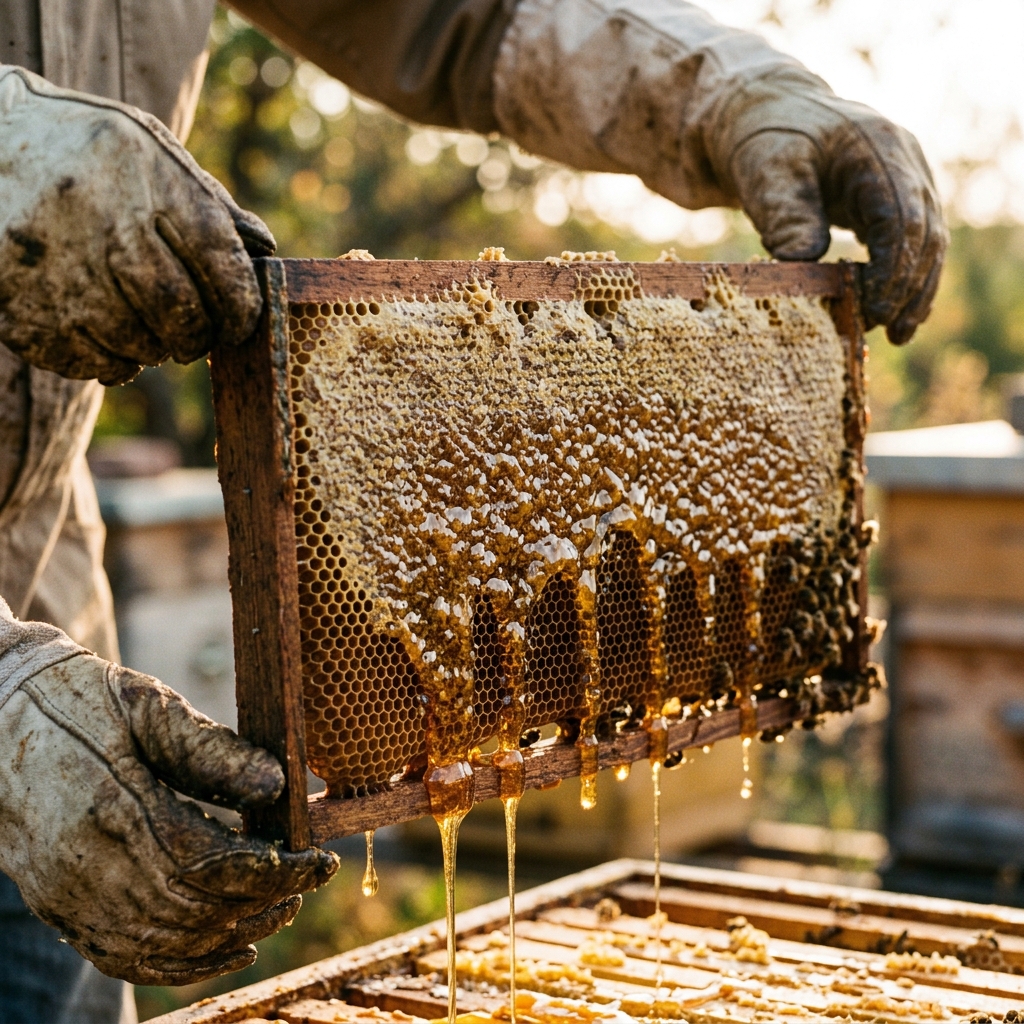
A refractometer tells you the exact moisture content of your honey before you harvest it. That one number determines whether your honey will store well or ferment in the jar a few months later.
This guide covers why moisture matters, how to read the signs bees give you, and how to actually use and calibrate a refractometer correctly.
Why Moisture Matters
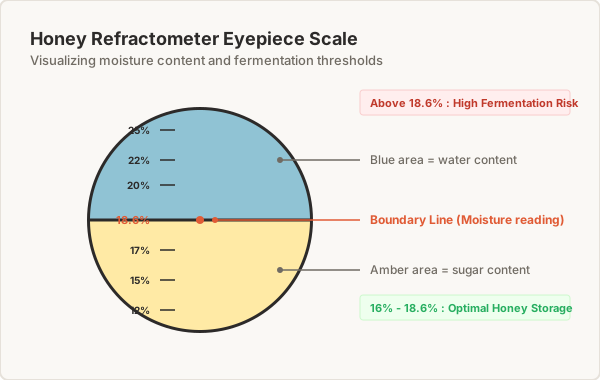
Honey with too much water in it will ferment over time. The USDA sets 18.6% moisture as the ceiling for Grade A and Grade B honey, and honey above 20% moisture falls to substandard. You can see the full breakdown on the USDA's extracted honey grading standards page.
Most beekeepers aim for somewhere between 16% and 18% moisture for honey that will store well long-term. Lower isn't a problem. Higher is where fermentation risk starts creeping in.
Capped Comb Is Your First Clue
Bees don't cap a cell until the moisture inside it has dropped to the right level. A frame that's roughly 75% to 80% capped or more is a strong sign the honey inside is ready, even before you test anything.
Uncapped cells on an otherwise mostly-capped frame usually aren't a big concern, since the surrounding capped honey helps stabilize the moisture level of the whole frame. A frame that's still mostly open and uncapped needs more time regardless of what a refractometer says about any one cell.
How to Use a Refractometer
Buy the right type. Make sure the refractometer is actually made for honey, not wine or beer. A brewing refractometer measures sugar content on a different scale and won't give you an accurate honey moisture reading. Check that it specifically lists a water or moisture percentage scale before buying.
Calibrate it first. Honey refractometers can't be calibrated with distilled water the way general-purpose ones can, since water falls outside their measurement range. Instead, place a couple drops of extra virgin olive oil on the prism and adjust the calibration screw until it reads 27%. This is a widely used, reliable calibration method for honey-range refractometers.
Take a small sample. Pull a tiny amount of honey from the frame using something precise, like a toothpick, rather than smearing a large glob across the glass. A little goes a long way.
Read the result. Close the cover plate, let the sample settle for a few seconds, and look through the eyepiece toward a light source. The line where light and dark meet on the scale is your moisture reading.
What If It's Not Ready Yet?
If your reading comes back above your target range, you have a couple of options. Leaving the frame on the hive longer, if the flow is still active, gives bees more time to finish reducing the moisture and capping it over.
If you've already extracted honey and the moisture is too high, running a fan or dehumidifier over open containers in a dry room can pull some of that excess moisture out before bottling.
A Note on Capping vs. Testing
For most hobby-scale harvests, waiting for frames to be 80% or more capped is a perfectly reliable method on its own, without needing to test every frame individually. I mostly rely on the capped-frame rule for my own harvests and only pull out the refractometer when a frame looks borderline or I want to double-check before bottling.
A refractometer becomes more useful when you're harvesting partially capped frames, blending honey from different sources, or selling honey where consistency matters more.
One more habit worth building in: wipe the prism clean with a soft cloth after every use. Leftover honey residue on the glass will throw off your next reading, and it's an easy step to skip when you're moving quickly through several frames.
Honey Moisture Quick Reference
Swipe sideways on the table below if you're on a phone and it doesn't fit your screen.
| Reading | What It Means |
|---|---|
| Below 17% | Ready, very stable for long-term storage |
| 17% to 18.6% | Ready, meets USDA Grade A/B threshold |
| Above 18.6% | Risk of fermentation, give it more time |
Frequently Asked Questions
What moisture level is safe for harvesting honey?
The USDA sets 18.6% as the ceiling for Grade A and B honey. Most beekeepers aim for the 16% to 18% range for honey that stores well long-term.
Can I use any refractometer for honey?
No. Refractometers made for wine, beer, or general Brix measurement use a different scale and won't give an accurate honey moisture reading. Look for one specifically labeled for honey with a water or moisture percentage scale.
How do I calibrate a honey refractometer?
Use a couple drops of extra virgin olive oil on the prism and adjust the calibration screw until it reads 27%. Distilled water won't work for honey-range refractometers, since water falls outside their measurement range.
Is a refractometer necessary, or is the capped-frame rule enough?
For most hobby-scale harvests, waiting until frames are 75% to 80% capped is reliable on its own. A refractometer adds more value if you plan to sell honey, since buyers and honey shows often expect a documented, consistent moisture reading rather than just a visual estimate.
What do I do if my honey's moisture is too high?
Leave the frame on the hive longer if the nectar flow is still active, so bees can continue reducing the moisture. For already-extracted honey, a fan or dehumidifier in a dry room can help pull out some excess moisture before bottling. Avoid blending high-moisture honey into an already-cured batch, since it can raise the moisture of the whole batch rather than staying isolated to just that portion.